
Each month, Trail Manager Emily Galka highlights flora and fauna that she observes in the Goethe State Forest that surrounds the Black Prong Resort.
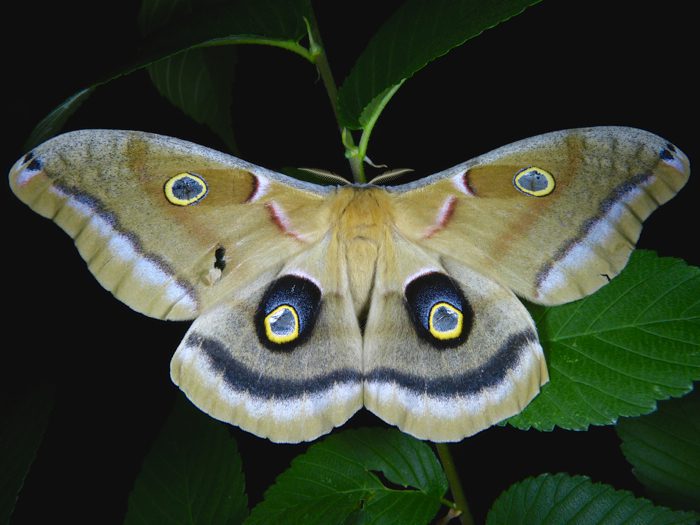
Goethe State Forest Species of the Month: Polyphemus Moth (Antheraea polyphemus)
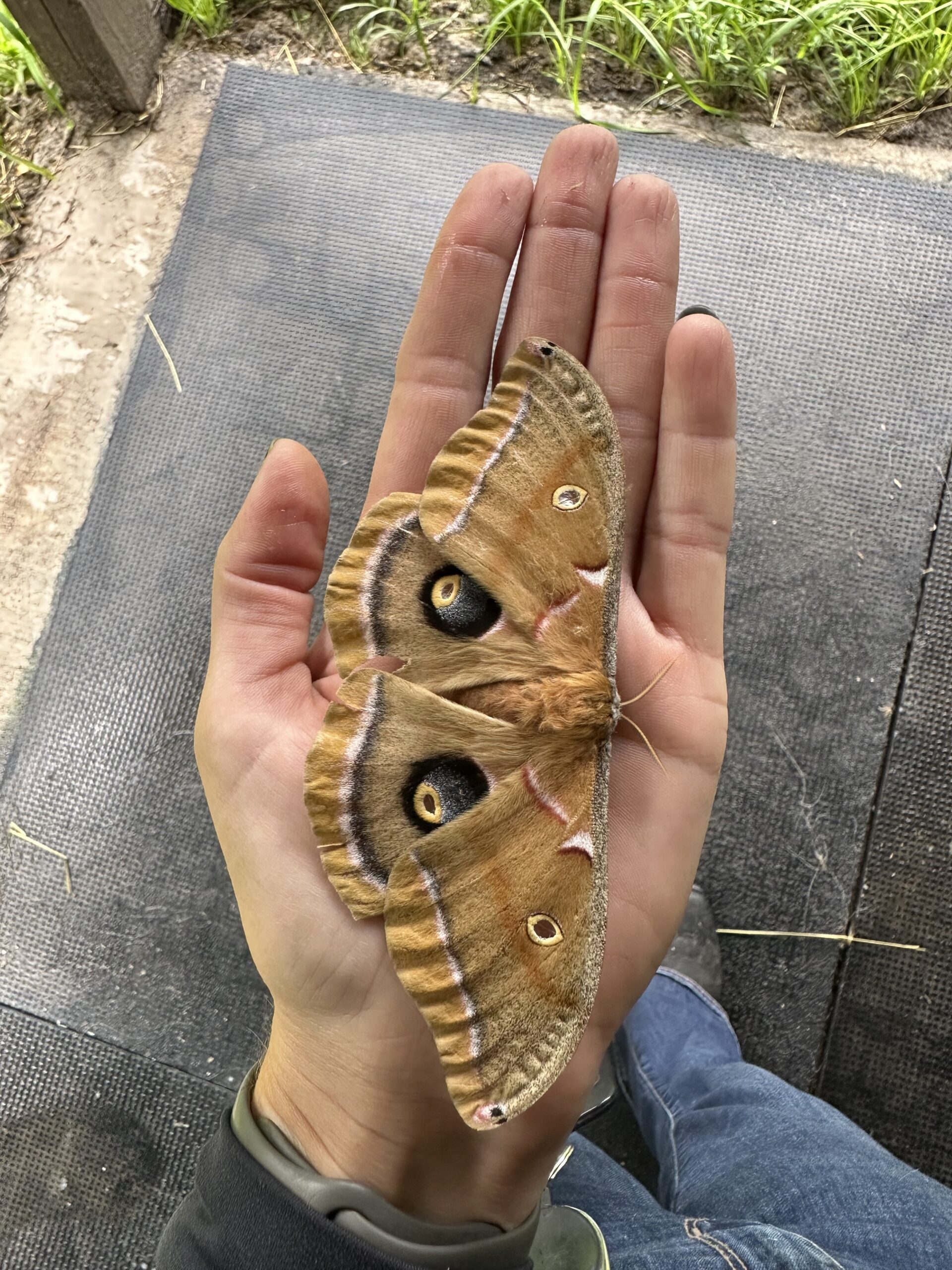
The other day we had a sunset carriage ride. We walked into the barn to start preparing for the ride when I noticed a huge brown moth laying belly up in the back of the golf cart. I couldn’t tell if it was dying or just having a tough time, but I didn’t want anything to be thrown on it since it was in the bed of the cart.
I picked it up and examined it- it was probably about 5 inches across, all brown with some lines on the wings, but most noticeably, eye spots. I had seen ones like this before and knew it was a Polyphemus moth, North America’s largest silk moth.
Polyphemus moths are found across the US, except for Arizona and Nevada. When they live in the north, they are univoltine, meaning they have one brood per year, but in the south they are bivoltine, meaning two broods per year. In Florida specifically the broods are staggered so moths emerge year round. By the time I got back from the carriage ride, I checked on the moth and to my surprise, it had started laying eggs!
I put them into a paper cup and decided to take them home. I knew I would have to learn more about them to raise them so I jumped right into it.
The eggs hatch after about one week, and they are typically supposed to be laid on a host plant so once the caterpillars come out, they can get too munching.
Their host plants are typically oak, maple, birch, or cherry- they are not picky. When they emerge from their eggs, they are almost a pale yellow and only a couple millimeters long.
They will spend the next 5 to 6 weeks eating, and molting multiple times until they are approximately 3 inch long bright green caterpillars. They will eventually pupate and be covered in a cocoon, typically attached to their host tree.
In the north, they will stay in their cocoon through winter and emerge in the springtime, but in Florida they typically emerge after two weeks. When they emerge as moths, they do not have mouths and cannot eat. They live for about a week or two as moths before they pass away.
They are not known to cause significant damage to any of their host plants, and scientists believe their main purpose is to be a good source for other animals in the food chain.
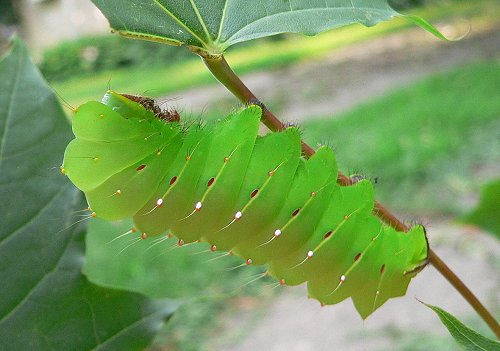
Out of the 19 eggs I got from the moth in the barn, 15 hatched, and 8 made it through the first two weeks. They seem to prefer water oaks and live oaks, and should emerge as moths at some point in mid-September. Never a dull moment in the life of a trail guide!

Emily Galka (shown with her horse Lisa) is Black Prong’s Trail Riding Manager and resident naturalist.