
Each month Trail Manager, Emily Galka, highlights flora and fauna that she observes in the Goethe State Forest that surrounds the Black Prong Resort. Goethe State Forest Species of the Month: Eastern diamondback rattlesnake (Crotalus adamanteus)
Each month Trail Manager, Emily Galka, highlights flora and fauna that she observes in the Goethe State Forest that surrounds the Black Prong Resort.
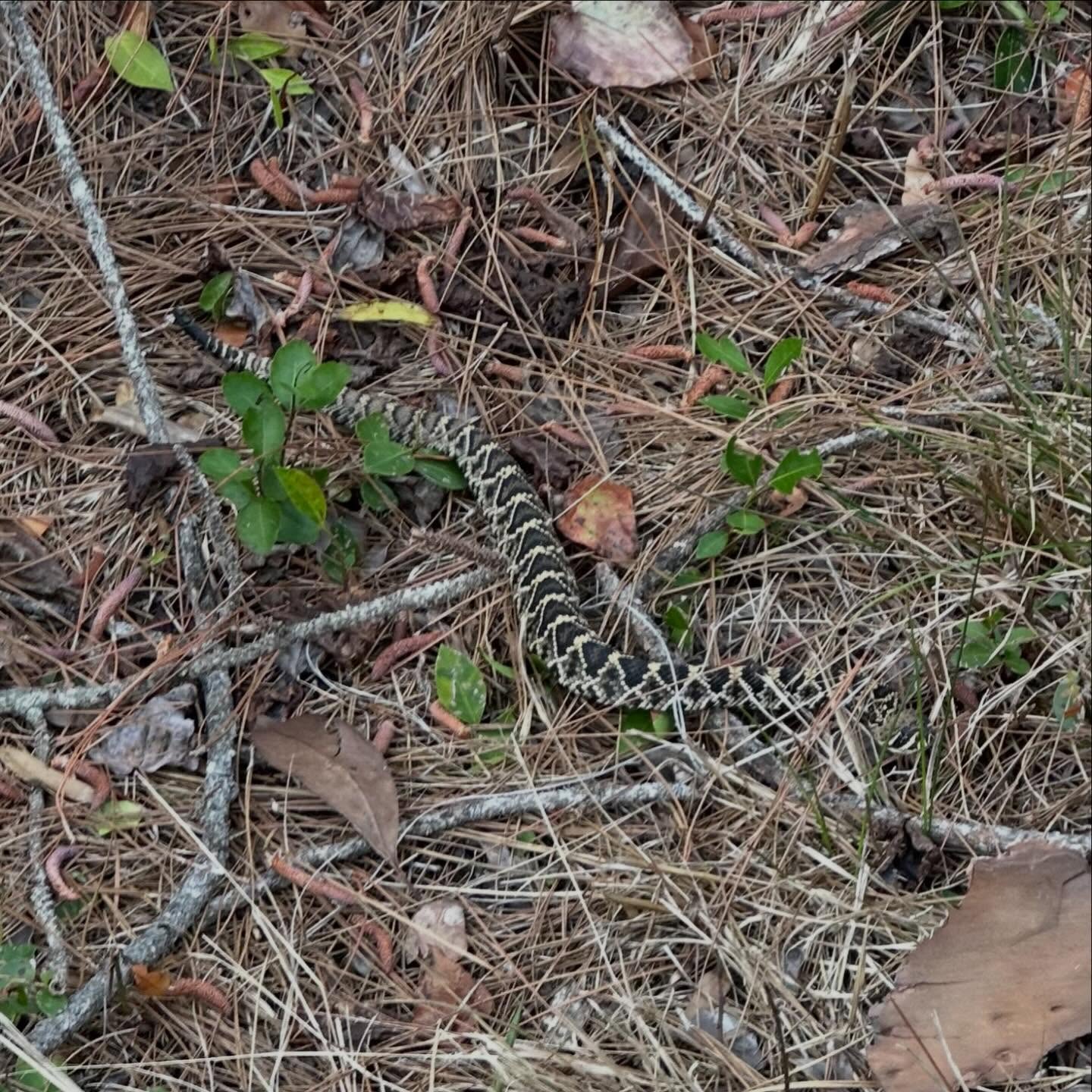
I was riding along on the Goethe long ride with a couple who owns their own horses and frequently rides. The husband was a little hard of hearing and kept trying to ride up next to me to have an easier time hearing. Typically we stay nose to tail so the leader can keep the group on the path of least resistance and set a good pace for all but I was letting it slide because I wanted to accommodate him. All was going well until about halfway through the section of green trail between Camp Road and Hospital Road I happened to look down slightly to my right. “Stop right there! Sarge is about to step on a rattlesnake!” The gentleman stopped right in the knick of time, and everyone got a good look at the snake while getting over to the left side.
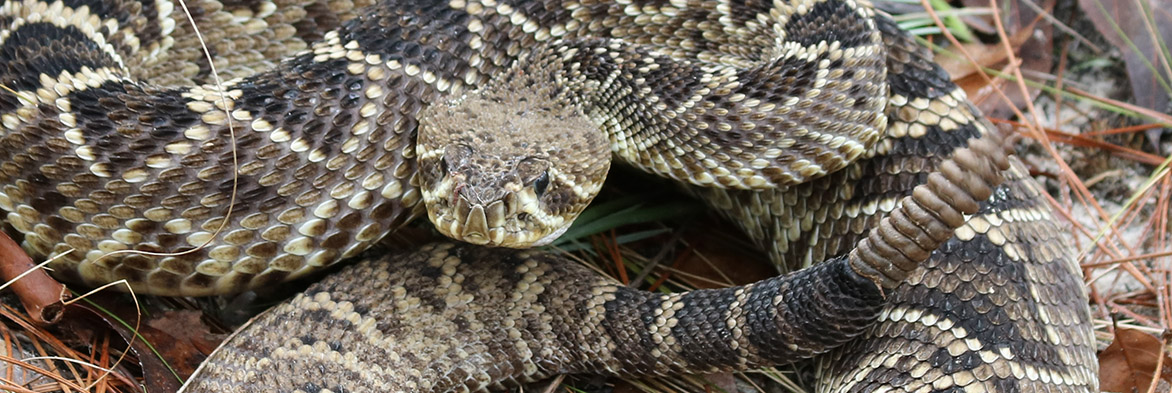
At that point I knew I had to really enforce the nose to tail rule because snake season has officially started. I got a good look and even snapped a few pictures and realized our little friend was in fact a juvenile eastern diamondback rattlesnake.
Snakes start becoming active when nighttime temperatures are consistently in the 50s and daytime jumps up to 70s and 80s. The eastern diamondback rattlesnake is the largest venomous snake in North America, typically growing between 3 and 5 feet long, though some can exceed 7 feet. It is easily recognized by the dark, diamond-shaped patterns along its back and the distinctive rattle at the end of its tail, which it uses as a warning when threatened. It is mainly found in the southeastern United States, especially in places like Florida and Georgia, it prefers habitats such as pine forests, scrublands, and sandy coastal areas. This snake is an ambush predator, feeding on animals like rabbits, rats, and birds, and it uses special heat-sensing pits near its eyes to detect warm-blooded prey even in the dark. Its venom is powerful and affects blood and tissue, but bites are rare and usually occur only when the snake feels threatened. Interestingly, it can control how much venom it injects and may sometimes deliver a “dry bite” with no venom at all.
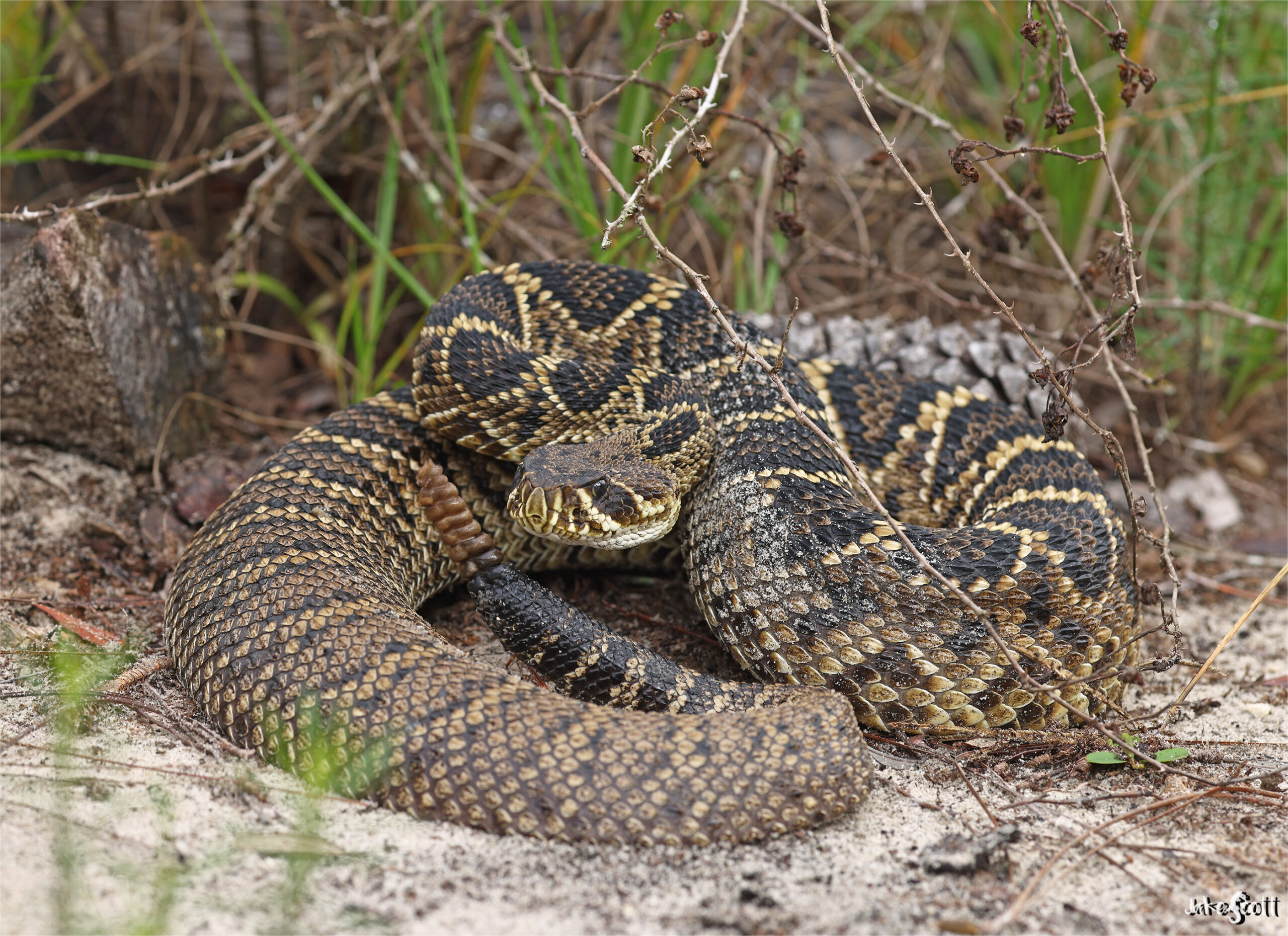
Luckily the snake we encountered didn’t perceive us as a threat. Many people will kill them for “their own safety” but we need to remember they are native species and play an important role in the ecosystems found in the Goethe.

Emily Galka (shown with her horse Lisa) is Black Prong’s Trail Riding Manager and resident naturalist.