
Each month, Trail Manager Emily Galka highlights flora and fauna that she observes in the Goethe State Forest that surrounds Black Prong Resort.
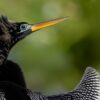
Goethe State Forest Species of the Month: Anhinga (Anhinga anhinga)
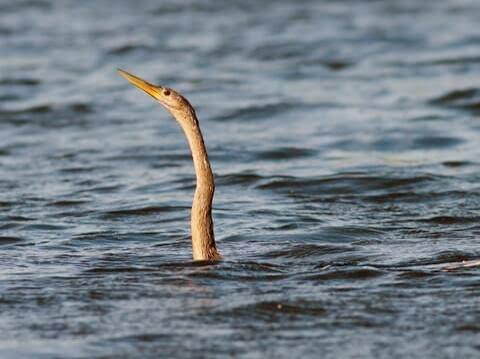
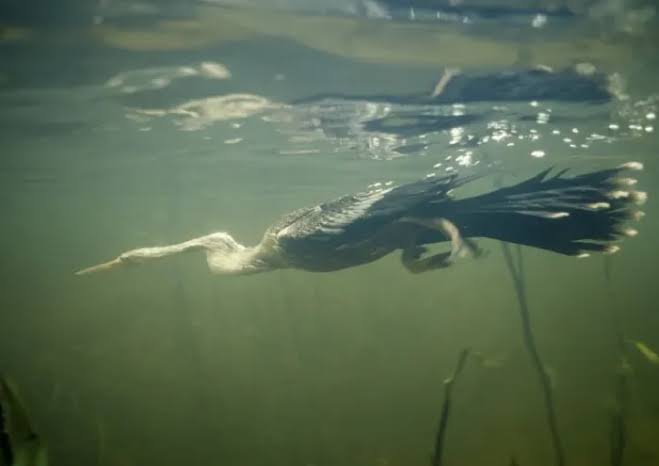
Over the summer there was a lot of construction happening at Black Prong, with one of the main projects being the addition of the pond in the center of the property. Upon completion, the water-based wildlife wasted no time moving in.
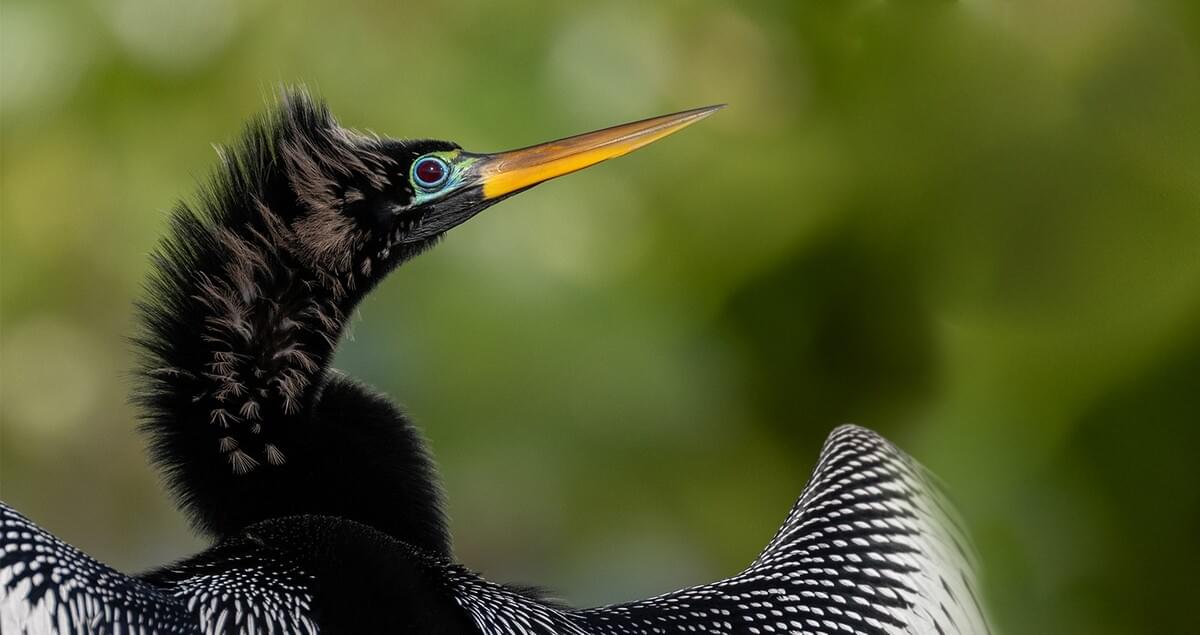
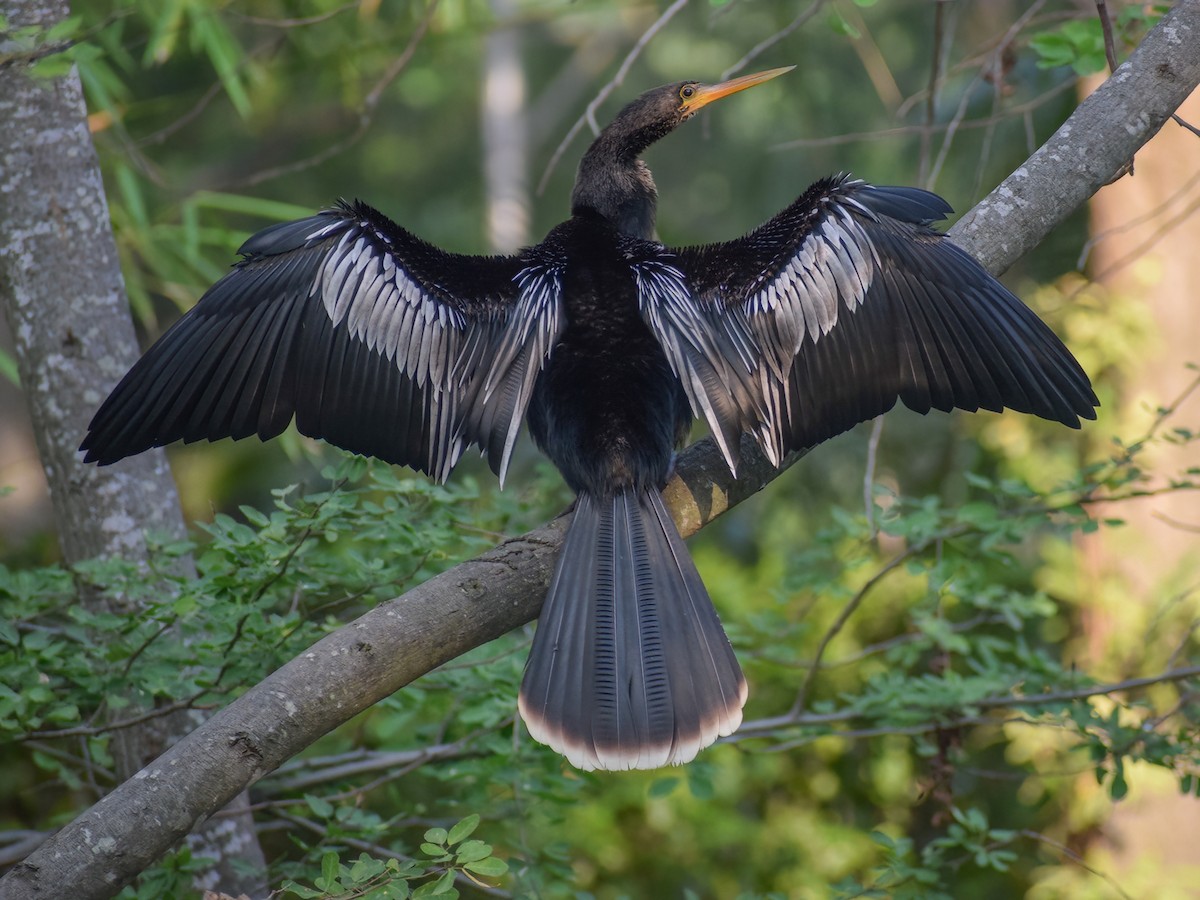
At first, it was alligators, turtles, and herons, but recently I’ve started to see one of my personal favorites, the anhinga. Anhingas are large dark colored birds with silver streaks and sharp pointed bills they use to spear fish. Their wingspan is about 3ft long and they tend to weigh 2.5 to 3lbs. Males tend to be darker while females have more brown colored necks. They have long slender necks that stick out of the water as they swim with their bodies submerged giving them the appearance of a snake. They have a distinctive kinked look in their neck that comes from a hinge-like joint after their 8th cervical vertebrae.
They are strong flyers capable of soaring and can also swim completely underwater. Unlike most water birds, anhingas do not have oily feathers, allowing the water to fully saturate them making them heavier and less buoyant, allowing them to stalk prey underwater. When their feathers are saturated, they are unable to fly and can quickly become chilled, so they are often seen perching along the water’s edge with their wings stretched out to dry and warm in the sun.
Anhingas are typically found around slow moving freshwater, living around the Gulf, the shores of Central America and throughout the northern half of South America. They eat small to medium-size fish, some crustaceans and invertebrates. Anhingas are not a threatened species, but are protected under the Migratory Bird Treaty Act of 1918, with reports of their populations growing slightly over the past century.
Though renovations to the Black Prong property are far from being over, I’m excited that the completion of the center pond has led to a new habitat for such extraordinary birds.

Emily Galka (shown with her horse Lisa) is Black Prong’s Trail Riding Manager and resident naturalist.