
Each month, Trail Manager Emily Galka highlights flora and fauna that she observes in the Goethe State Forest that surrounds the Black Prong Resort.
Goethe State Forest Species of the Month: Red-cockaded Woodpecker
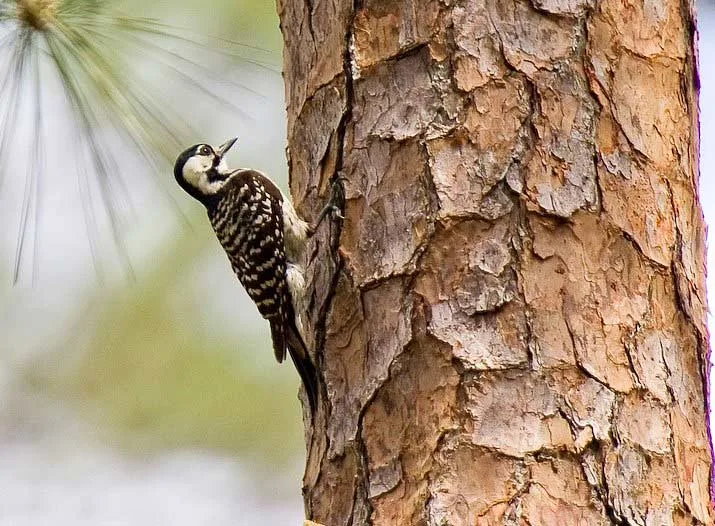
This month marks two years of highlighting species from the Goethe for the Black Prong newsletter. With that milestone — and the wildfire that affected the forest last month — I knew I wanted to feature a remarkable species closely tied to forest fire ecology. It didn’t take long to choose the red-cockaded woodpecker.
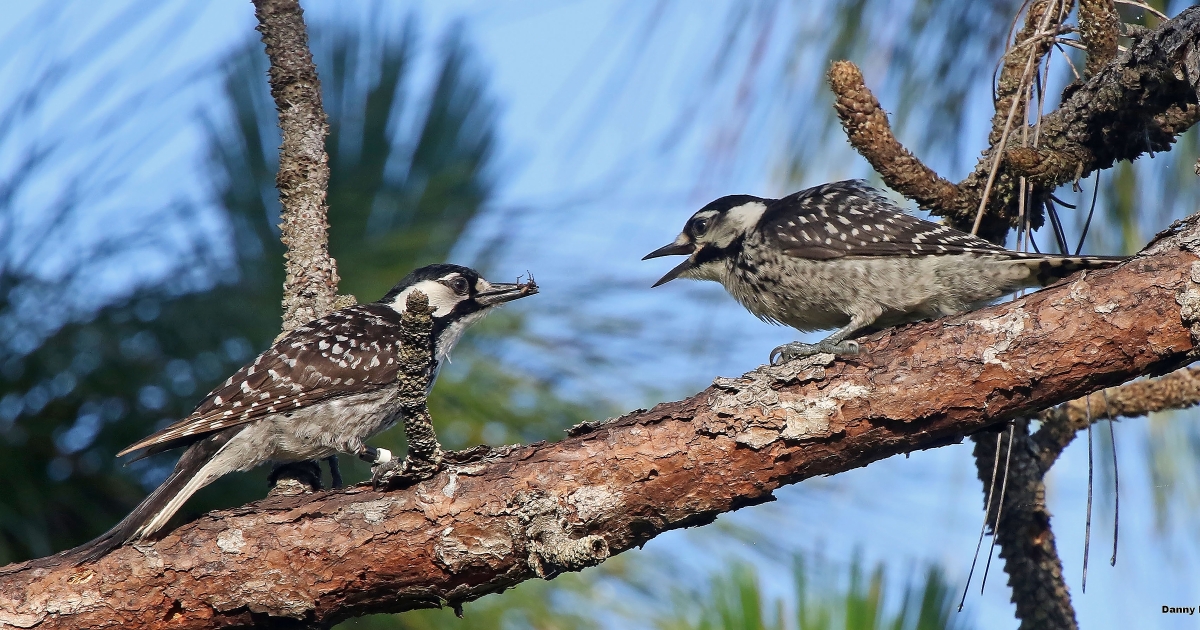
Honestly, it’s surprising I haven’t written about them already, considering the important role they play in Goethe State Forest. Red-cockaded woodpeckers, or RCWs, are a threatened species native to southern pine ecosystems. In the Goethe, they are most closely associated with longleaf pines.
These birds are highly specialized and nest only in living pine trees, typically older trees affected by heartwood rot, which makes them easier to excavate for nesting cavities. Because the trees are alive, they produce sap around the cavity entrance. This sticky sap helps deter snakes and other predators from climbing up to the nest.
Longleaf pines require fire for part of their life cycle so RCWs are no stranger to forest fires. Last June, I had the opportunity to join the Goethe biologist in banding RCW nestlings. Wildlife staff closely monitor nesting colonies to track how many birds hatch each year and how many survive to adulthood. The bands, essentially tiny plastic bird bracelets, are color-coded to identify where and when each bird was born.
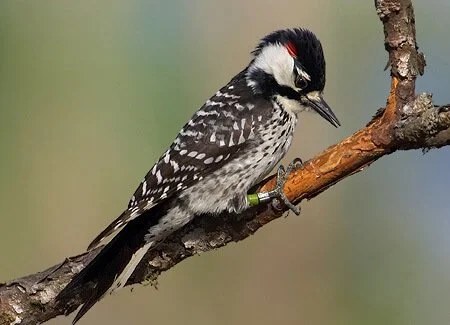
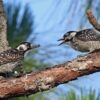
RCWs resemble other woodpeckers but are slightly smaller than a robin. They are mostly black and white, with distinctive white cheek patches. Males have a small red streak on the back of the head called a “cockade,” named after the rosette-style adornments once worn on hats.
These woodpeckers live in family groups of two to five adults, usually consisting of a breeding pair and male offspring from previous years that help forage and defend the colony from predators. Breeding pairs are monogamous and mate for life.
Although the Cow Creek Fire unfortunately damaged some nesting areas, RCW populations have steadily recovered since protections were established under the Endangered Species Act. In 2024, the species was reclassified from endangered to threatened, and populations in the Goethe are continuing to thrive. While visitors are unlikely to spot RCWs around the resort, their colonies are typically deeper within the forest, understanding their role is essential to appreciating the unique longleaf pine ecosystem that makes Goethe State Forest so special.

Emily Galka (shown with her horse Lisa) is Black Prong’s Trail Riding Manager and resident naturalist.