
Each month, Trail Manager Emily Galka highlights flora and fauna that she observes in the Goethe State Forest that surrounds the Black Prong Resort.
Goethe State Forest Species of the Month: Resurrection Fern (Pleopeltis polypodioides)
As many of you may know, Florida is currently experiencing a drought, with our region specifically classified as being in severe to extreme drought conditions. While that may not make much difference to some people, as someone who spends time in the Goethe every day, I get to see the effects up close.
We’ve had a few scattered rain showers here and there, but they have done little to help most of the plants and animals. One exception, however, is a plant I see all over Black Prong: the resurrection fern.
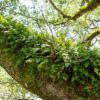
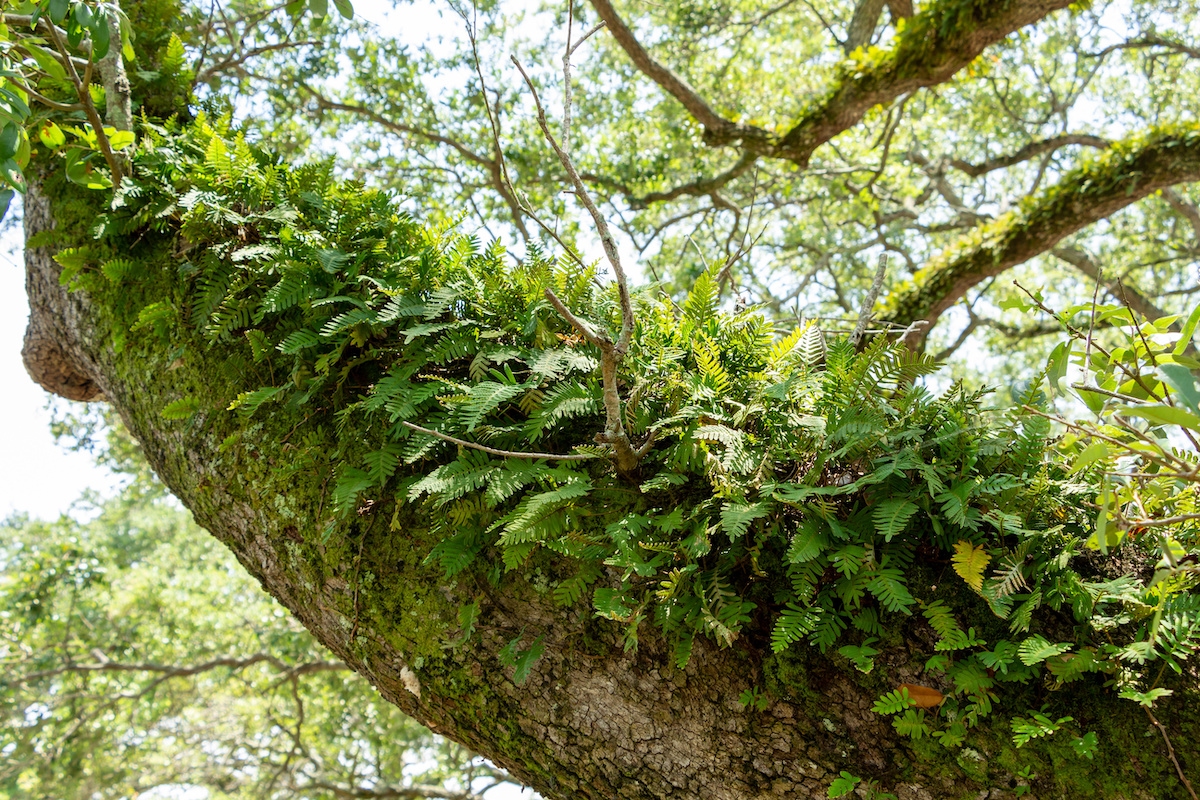
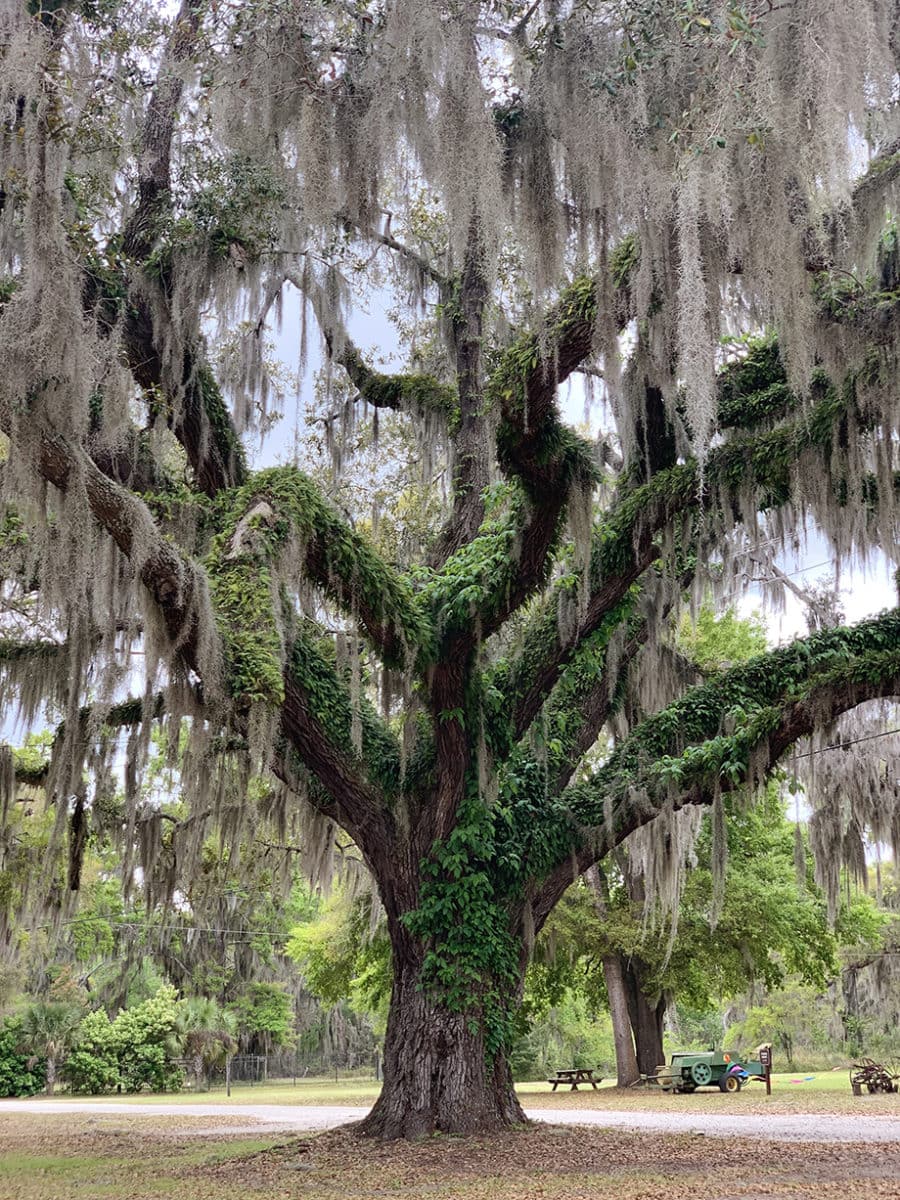
It’s easy to notice that the old oaks around Black Prong have their own miniature ecosystems, draped with Spanish moss and home to squirrels and countless other creatures. But if you’re a little higher off the ground—perhaps on horseback—you can spot rows and rows of tiny ferns growing along the branches.
When the drought first began, I was saddened to see them shrivel into brown, crispy curls that appeared completely dead. Then, after a passing rain shower sprinkled the resort, those same ferns sprang back to life. Within a day they had transformed from dry and lifeless to fresh and green. It seemed almost like magic, and I knew I had to learn more about them.
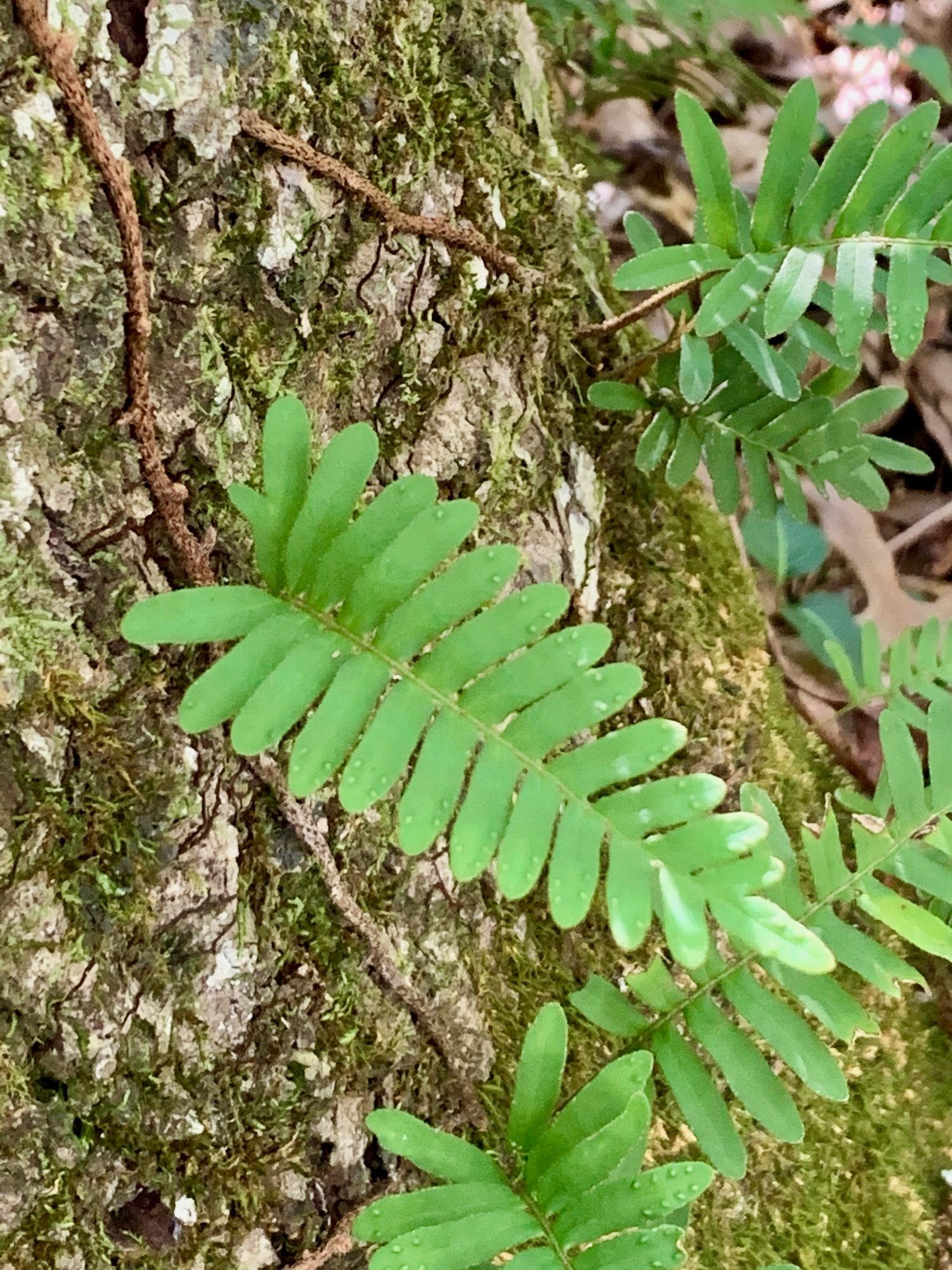
Most plants will die after losing about 10% of their water content. Resurrection ferns, however, can lose up to 97% of their water and still recover. They are epiphytic plants, meaning they grow on other structures, such as trees, rather than in the soil. They prefer hardwood trees and obtain moisture and nutrients from the air, rain, and the surface of their host tree without harming it.
When these ferns become completely dried out—a condition known as desiccation—a simple rain shower can rehydrate them remarkably quickly. They may regain about 50% of their water within an hour and can become fully rehydrated within 24 to 48 hours. Even more impressive, they can resume photosynthesis almost immediately as they begin to absorb water.
Resurrection ferns are native to the southeastern United States, but they can also be found throughout Central America and parts of Africa. In a landscape struggling through drought, they serve as a fascinating reminder of nature’s resilience and ability to adapt to challenging conditions.

Emily Galka (shown with her horse Lisa) is Black Prong’s Trail Riding Manager and resident naturalist.